MICROCAP: Microalgae-Powered Oxygen Generator Showcases Thailand’s Innovation Capacity for Urban Air Quality and Carbon Neutrality
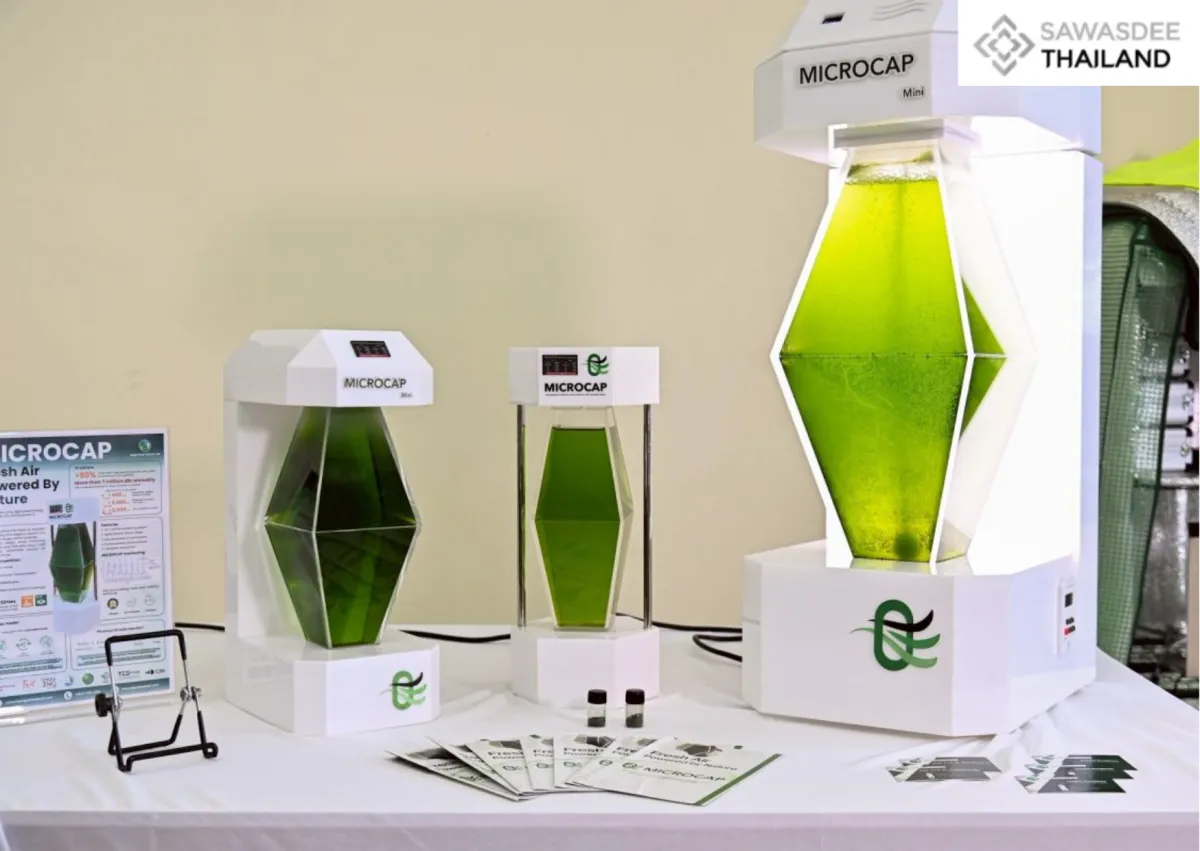
Thailand continues to face growing challenges related to air pollution and greenhouse gas emissions, particularly in urban areas where green space is limited. Addressing these issues requires innovative solutions that go beyond traditional approaches. Researchers from Chulalongkorn University, a leading public academic institution, have developed “MICROCAP,” a microalgae-powered oxygen generator designed to improve indoor air quality while contributing to carbon dioxide capture in confined urban environments.
MICROCAP operates by mimicking natural photosynthesis through microalgae cultivated and optimized using chemical engineering techniques. The system draws indoor air into a chamber containing microalgae, which absorb carbon dioxide and release oxygen as part of their metabolic process. The enhanced microalgae used in the system demonstrate a significantly higher capacity for oxygen production and carbon dioxide capture compared to conventional trees, making MICROCAP an efficient alternative for buildings and urban settings where space is scarce.
This innovation highlights Thailand’s strong research and development capabilities in environmental technology and sustainable solutions. MICROCAP represents a practical application of scientific knowledge from a public institution to address global challenges such as carbon neutrality and climate change mitigation. By integrating nature-inspired technology with advanced engineering, the project reinforces Thailand’s potential to contribute meaningful solutions to sustainable urban living at both national and international levels.