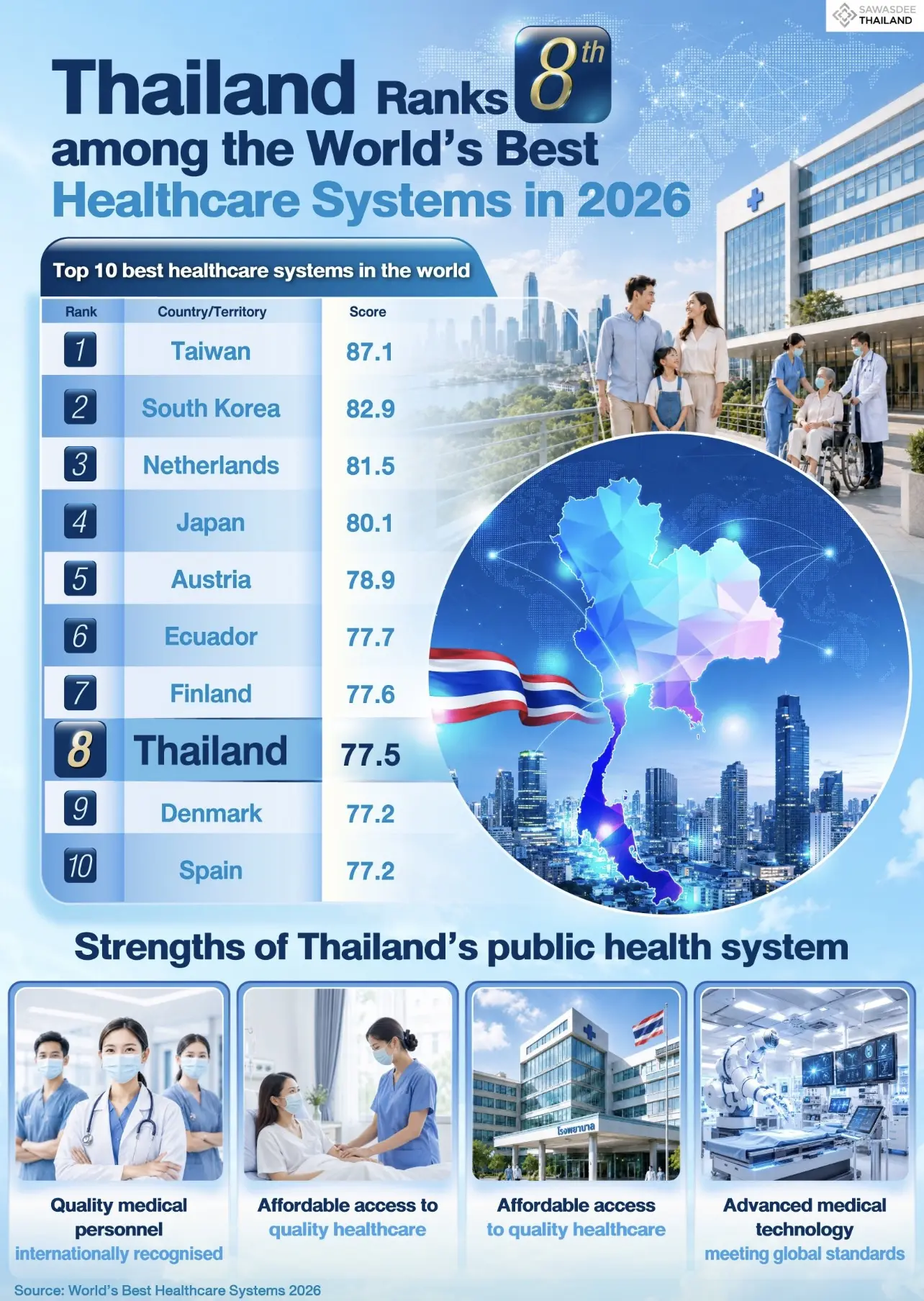
Thailand’s Healthcare System Faces Critical Turning Point Driven by Emerging Medical Innovations

Thailand is approaching a decisive moment in healthcare development as academic institutions and the medical sector outline the forces that will shape the national wellness economy in 2026. Mahidol University recently announced a comprehensive roadmap addressing urgent structural challenges and identifying the three innovations projected to transform the healthcare landscape: Advanced Therapy Medicinal Products (ATMPs), xenotransplantation, and medical artificial intelligence.
Thailand continues to confront rising healthcare expenditures, an expanding elderly population, an increase in chronic and infectious diseases, and a shrinking workforce contributing to national healthcare financing. Chronic diseases account for more than 400,000 deaths annually, generating economic losses estimated at 1.6 trillion baht each year. Health system pressure continues to intensify as the number of births averages only 400,000 per year, resulting in a long-term demographic imbalance and growing national financial obligations.
A shortage of medical personnel remains a significant challenge. Current figures indicate approximately one doctor per 2,000 people, falling short of international standards. The distribution of healthcare workers is uneven, with Bangkok maintaining one doctor per 462 people, compared with one doctor per 5,000 people in some provinces. Heavy workloads and systemic inefficiencies contribute to an annual loss of more than 450 doctors from the profession. Demand for medical services is projected to rise by more than 40 million visits in 2026, placing further strain on existing systems.
Mahidol University has directed national attention toward innovations capable of addressing these issues. ATMPs, including cell therapy and gene therapy, are under development for medium-scale manufacturing through the MU Biophant facility, with future expansion toward large-scale production in collaboration with domestic biotechnology partners. Xenotransplantation represents another critical opportunity, offering a method to reduce organ shortages by using genetically modified pig organs. Partnerships are being formed to establish SPF pig farms to support this advancement.
Medical AI and precision health promotion are also central components of the proposed reforms. The MU AI Centre will support data-driven healthcare, strengthen precision medicine capabilities, and advance research in herbal medicines and functional foods to enhance the national wellness economy.
The wellness economy is expected to become the dominant force in 2026, shifting national focus from disease treatment to comprehensive well-being. Collaboration among government agencies, private sector innovators, and the public will be required to drive sustainable reform. Such efforts have the potential to secure long-term health resilience and generate a significant new economic engine for Thailand.