NSTDA and Kasetsart University Showcase High-Yield Climate-Resilient Rice Varieties at “NSTDA-KU Rice Field Day 2025”
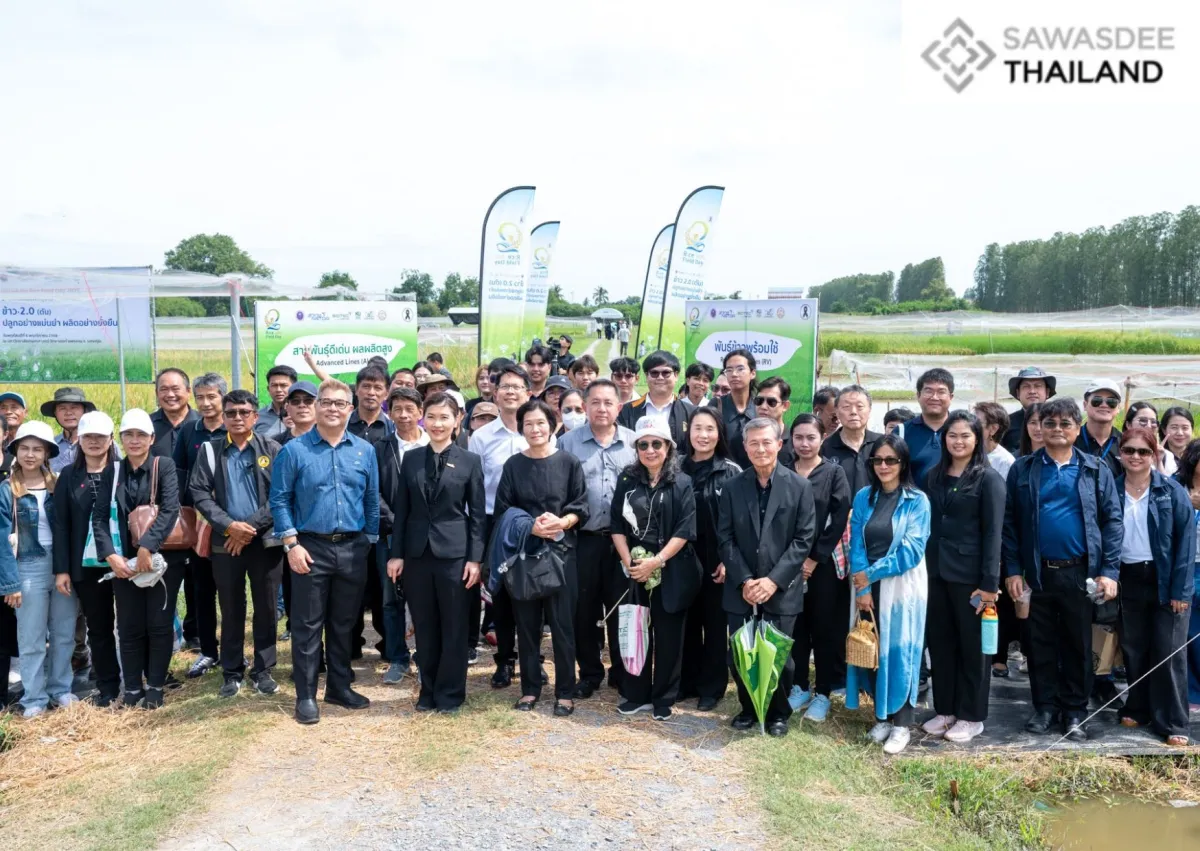
The National Science and Technology Development Agency (NSTDA), through
the National Center for Genetic Engineering and Biotechnology (BIOTEC), in
collaboration with Kasetsart University, organized the “NSTDA-KU Rice Field
Day 2025” at Kamphaeng Saen Campus for the second consecutive year. The
event highlighted Thailand’s advancements in rice breeding technology,
showcasing innovative rice varieties that produce yields of 1.5–2 tons per rai,
have short growing periods, resist pests and diseases, and can withstand
climate challenges while remaining environmentally friendly.
The showcased varieties included seven officially registered rice strains and
three pending approval from the Department of Rice. Among them were
premium and high-yield types such as Hom Siam, Hom Siam 2, Hom Cholsit 2,
Biotech 1, Nan 59, Hom Naka, and Riceberry 2. These varieties aim to enhance
productivity, reduce costs, and provide sustainable solutions for farmers while
supporting Thailand’s goal of climate-smart and low-carbon agriculture.
Demonstration plots at the event presented high-yield and climate-resilient rice
varieties, including Biotech 1, which helps reduce greenhouse gas emissions.
The event also featured academic lectures, research exhibitions, and
demonstrations covering over 700 rice genetic resources. Experts discussed the
integration of digital and AI technologies in rice breeding, as well as
bio-products for field management. The “NSTDA-KU Rice Field Day 2025”
exemplifies the power of collaboration between government, academia, and
industry to apply science, technology, and innovation toward increasing
agricultural productivity, strengthening food security, and driving Thailand toward
sustainable and competitive agriculture.