JST-NEXUS Project Drives Thailand–Japan Cooperation to Advance Clean Hydrogen for the Nation’s Future Energy
The Ministry of Higher Education, Science, Research and Innovation, through the National Science and Technology Development Agency (NSTDA), in collaboration with the Joint Graduate School of Energy and Environment (JGSEE) of King Mongkut’s University of Technology Thonburi (KMUTT) and Kyushu University, Japan, is implementing a project to develop prototype technologies that convert agricultural biomass into high-purity biohydrogen. This hydrogen will be further used as fuel for hydrogen-powered fuel cell vehicles.
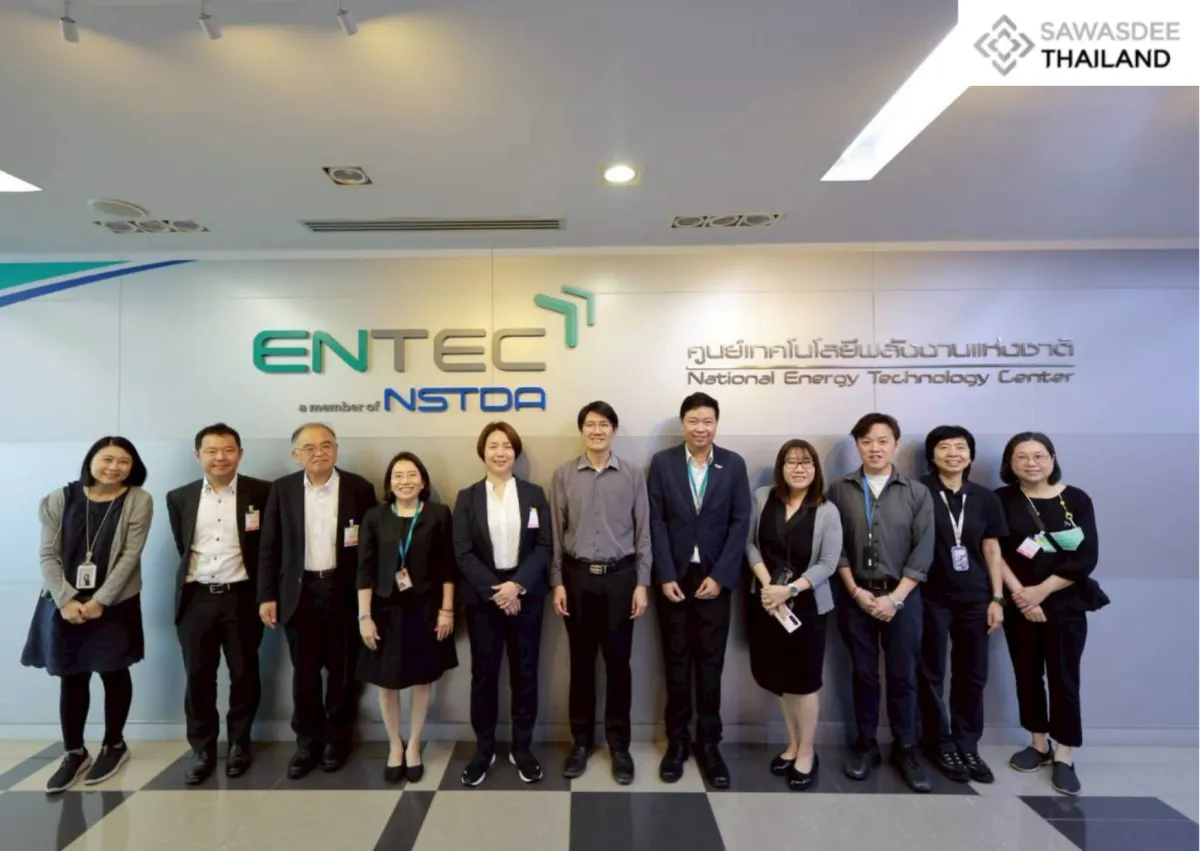
During the meeting, Dr. Sumitra Jarusrorngkul, Director of the National Energy Technology Center (ENTEC), NSTDA, together with research teams from ENTEC and BIOTEC, joined Prof. Dr. Nuadorn Laosiripoj, Director of JGSEE and project leader, in welcoming researchers and experts from Japan — including Prof. Tatsumi Ishihara, Assoc. Prof. Miki Inada, and Assoc. Prof. Motonori Watanabe. The session focused on reviewing research progress, visiting laboratory facilities, and identifying pathways to scale prototype technologies toward industrial-level hydrogen production, particularly in the fields of bio-based and clean energy technologies that align with Thailand’s carbon-reduction goals.
The project aims to utilise agricultural biomass, especially cassava, to produce hydrogen through a dark fermentation process combined with an AI-optimized synthetic microbial consortium. This is further enhanced by a photobiocatalyst system that accelerates enzyme activity using titanium dioxide and hydrogenase enzymes developed by Japanese researchers. The integrated system increases production efficiency and the purity of hydrogen gas before testing it in hydrogen fuel cells for vehicles.
The initiative is expected to improve the value of agricultural residues, reduce biomass waste, and support the development of competitively priced high-purity hydrogen fuel. It also contributes to Thailand’s carbon-reduction targets, supports the BCG economic model, and marks a key step in advancing clean energy and transforming agricultural waste into energy for the future.