From Policy to Action: How Thailand, Malaysia, Hong Kong, and Singapore Translate the Bangkok Blueprint into Practice
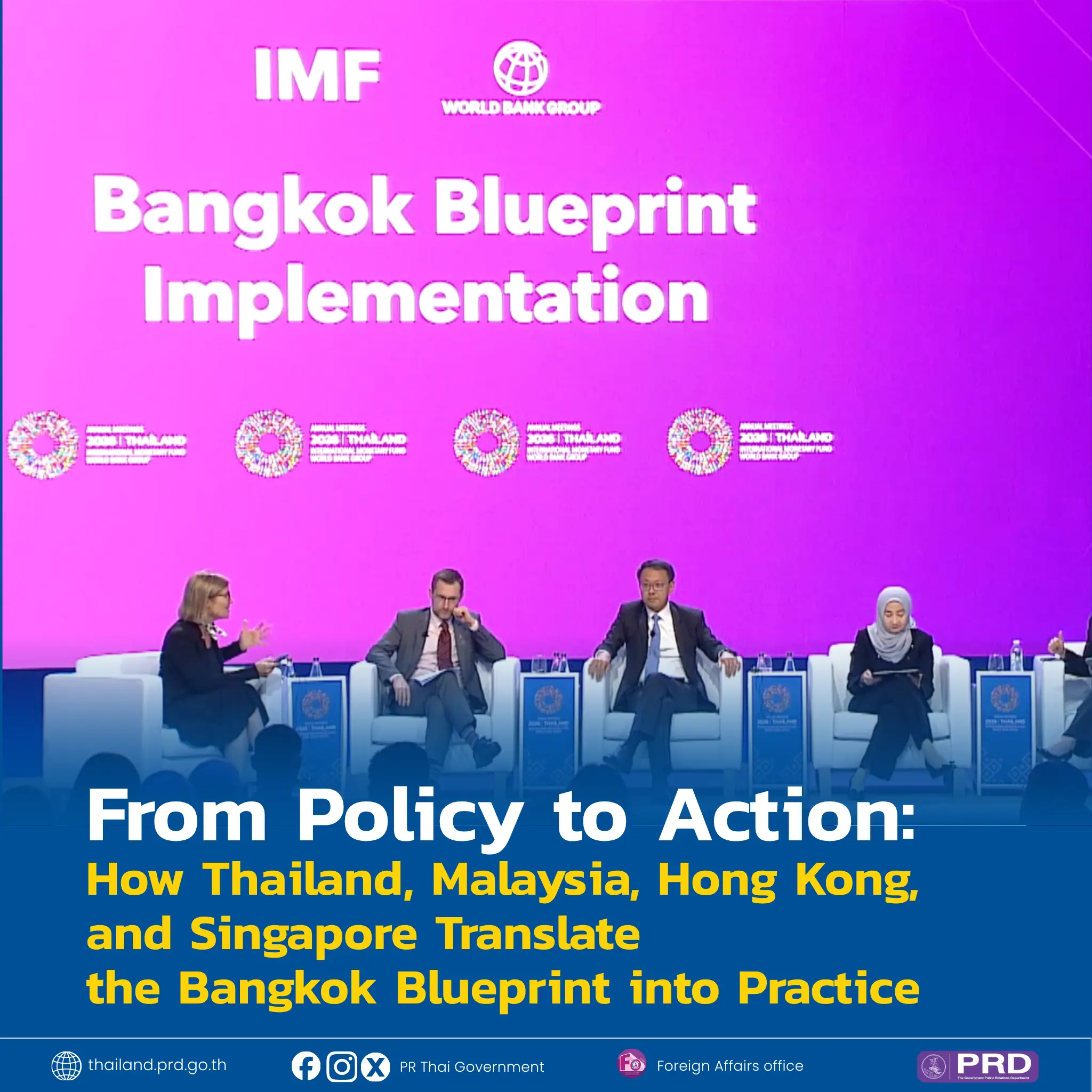
From Policy to Action: How Thailand, Malaysia, Hong Kong, and Singapore Translate the Bangkok Blueprint into Practice
Following the launch of the Bangkok Blueprint, senior officials from financial authorities in Thailand, Malaysia, Hong Kong, and Singapore gathered at the Bangkok Blueprint Implementation Session during the 2026 IMF-World Bank Group Annual Meetings in Bangkok on 14 October to share best practices for preventing, detecting, and responding to digital fraud.
Starting with Thailand, Daranee Saeju, Deputy Governor of the Bank of Thailand, highlighted the importance of preventing scammers from reaching potential victims in the first place. Thailand has established the Central Fraud Registry (CFR) to facilitate information sharing and strengthen the management of mule accounts.
Next, Norhana Endut, Assistant Governor of Bank Negara Malaysia, presented Malaysia's National Fraud Portal (NFP), which integrates case reporting and fund tracing across payment networks to accelerate fraud detection and fund recovery.
Turning to Hong Kong, Raymond Chan, Executive Director of the Hong Kong Monetary Authority, highlighted a bank-to-bank information-sharing scheme covering both corporate and personal accounts to help intercept scams.
Finally, Leong Chiong, Deputy Managing Director of the Monetary Authority of Singapore, shared Singapore's approach to strengthening behavioral safeguards. These include cooling-off periods, contextual warnings, and additional checks for high-risk transactions, giving consumers more time to reconsider before transferring funds.
From shared registries to smarter safeguards, each economy is turning the Bangkok Blueprint from a policy framework into practical action, proving that fighting fraud works best when prevention, information sharing, and consumer protection go hand in hand.
Source: PR Thai Government