Emerging Markets Get Only 5-8% of Global Institutional Capital, World Bank Group Says
Emerging Markets Get Only 5-8% of Global Institutional Capital, World Bank Group Says
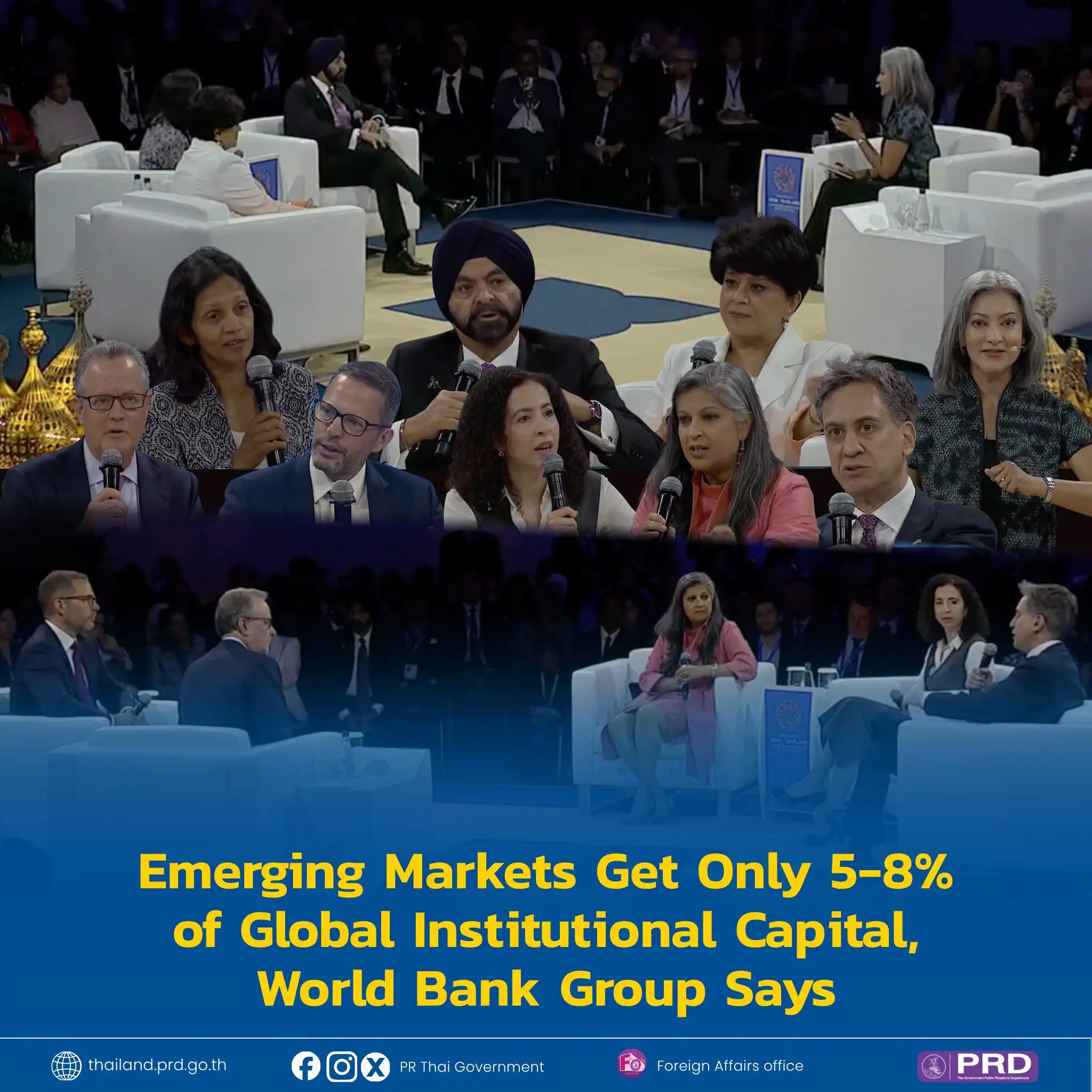
At the WBG Flagship session "Unlocking Investment Opportunities in Emerging Markets to Create Jobs" during the 2026 IMF-World Bank Group Annual Meetings in Bangkok on 14 October, World Bank Group President Ajay Banga joined leaders from governments, development institutions, financial markets, and the private sector to tackle a key question: how can we mobilize more private capital to create jobs and drive growth?
The numbers show the gap. Institutional investors and banks manage about US$280 trillion in assets worldwide, yet only 5-8% is invested in emerging economies. With public financing and development finance institutions facing constraints, private investment is increasingly essential.
Four priorities emerged:
■ De-risk investments and build investor confidence. Predictable regulation, transparent governance, and reliable legal systems matter. Credit guarantees, political risk insurance, local-currency financing, and junior capital can help absorb risk and attract private money.
■ Scale up with standardized, repeatable mechanisms. Moving beyond one-off deals toward portfolio-based financing, standardized guarantees, and a new asset class of private-sector debt backed by MDBs can open the door for pension funds, insurers, and asset managers.
■ Deepen domestic capital markets. Strong governance, timely disclosure, and local-currency financing reduce currency risk and reliance on foreign funding. Innovative structures can also channel capital to micro, small, and medium-sized enterprises (MSMEs).
■ Turn investment into jobs and real results. Focus on renewable energy, power, water, transport, education, and healthcare. Kenya's geothermal development shows how governments, the World Bank Group, and private investors can use risk-sharing to build models that attract even more capital. More effort is still needed in low-income and fragile countries.
■ The results so far: in fiscal year 2026, the World Bank Group mobilized a record US$112 billion in private capital and issued US$25 billion in guarantees. The next step is to scale what works through standardized, repeatable, and coordinated mechanisms across countries and sectors.
The message is clear: the capital exists. The challenge is connecting it to the opportunities that create jobs and lift economies.
Source: PR Thai Government