Dialogue Summary: Youth and the Next Sources of Economic Growth in Asia in the Age of AI
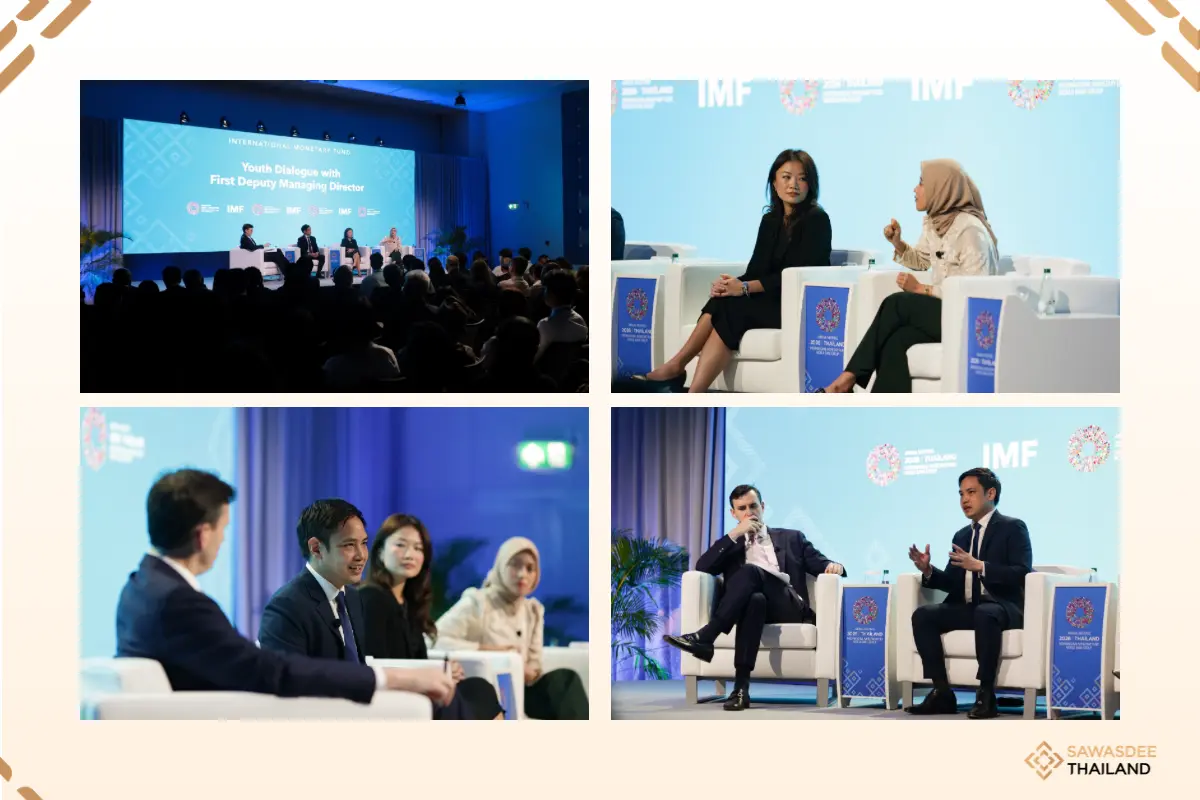
“Youth Dialogue with First Deputy Managing Director”
2026 IMF–World Bank Group Annual Meetings
12 October 2026, 11.30-12.45 hr.
The dialogue, moderated by Dan Katz, First Deputy Managing Director of the International Monetary Fund (IMF), brought together representatives from the technology sector, venture capital, and youth organizations to discuss the opportunities and challenges facing young people in Asia amid rapid advances in artificial intelligence (AI), demographic shifts, and changes in the global trading system.
Key points from the dialogue included:
1. AI can create new opportunities and boost economic productivity through product development, market expansion, the creation of new businesses, and cost reduction.
2. Preparing young people for the future requires more than AI literacy. It also requires aligning education and skills development with future labour market needs, expanding opportunities to gain work experience, and reducing inequalities in access to technology and quality education.
3. Job creation should be promoted alongside youth entrepreneurship through government support for employment, a supportive business ecosystem, clear and efficient policies and regulations, improved access to capital, skills development, business support networks, and fewer barriers to entering regional and global markets.
4. The urban–rural gap in access to opportunities should be narrowed by helping farmers access production knowledge, markets, export standards, and financing. Governments should also invest in inclusive digital infrastructure, access to devices, and quality education.
5. Young people should have a meaningful role throughout the policy cycle, from policy design and implementation to monitoring and evaluation.
Aukrit Unahalekhaka, Co-Founder and CEO of Thara Green, joined the dialogue as a representative of Thailand’s private sector. He highlighted the use of AI to improve agricultural productivity and increase Thai farmers’ incomes through precision farming. He also discussed approaches to converting agricultural waste into biocarbon materials for construction, as well as the use of AI to assist with documentation and reduce communication barriers.
He identified creativity, critical thinking, and a sound understanding of workflows and real-world problems as key qualities when recruiting people to work with AI. He also emphasized that farmers should not rely solely on AI, as agriculture requires practical skills and experience to ensure that AI is used effectively and sustainably.