ASEAN Urged to Strengthen Resilience and Deepen Integration Amid Global Uncertainties
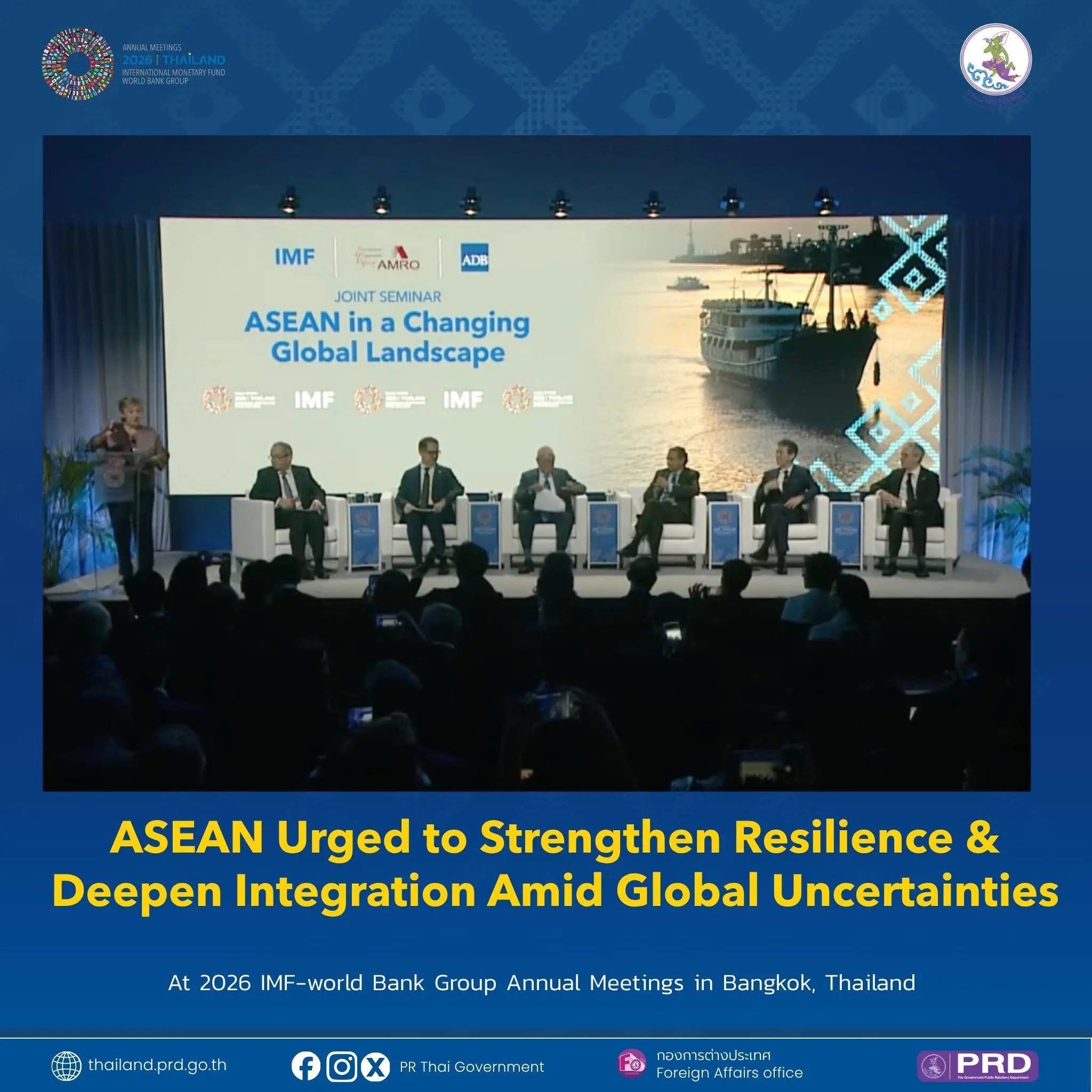
At the "ASEAN in a Changing Global Landscape" panel during the 2026 IMF-World Bank Group Annual Meetings in Bangkok on 14 October, IMF Managing Director Kristalina Georgieva highlighted Asia's role as a key driver of global growth. Asia is expected to account for 68% of global economic growth in 2026, while ASEAN represents a USD 4.5 trillion economy with around 700 million people. However, the region still faces challenges from energy price volatility, global trade restructuring, El Niño, and natural disasters.
Key takeaways from the discussion:
1️⃣ Strengthen economic resilience: Maintain adequate fiscal buffers and provide targeted support to vulnerable households rather than relying on broad-based price subsidies.
2️⃣ Accelerate structural reforms: Boost competitiveness through private-sector investment, capital market development, and digital transformation, while preparing for population aging, natural disasters, and rapid technological change, particularly in artificial intelligence (AI).
3️⃣ Expand intra-regional trade: Reduce non-tariff barriers and deepen trade agreements to unlock substantial economic gains.
4️⃣ Enhance regional connectivity: Advance the ASEAN Power Grid, renewable energy, cross-border payment systems, and integrated capital markets. The Asian Development Bank (ADB) has pledged USD 30 billion for ASEAN, including USD 10 billion for the ASEAN Power Grid.
5️⃣ Deepen regional and international partnerships: Strengthen cooperation among ASEAN, Japan, China, South Korea, and international institutions to support economic surveillance, capacity development, and regional financial stability.
Asia is driving global growth. The next step is for ASEAN to grow stronger, together.
Source: PR Thai Government