Thailand’s Smart-Crime Shield Puts the Kingdom at the Centre of Regional Safety
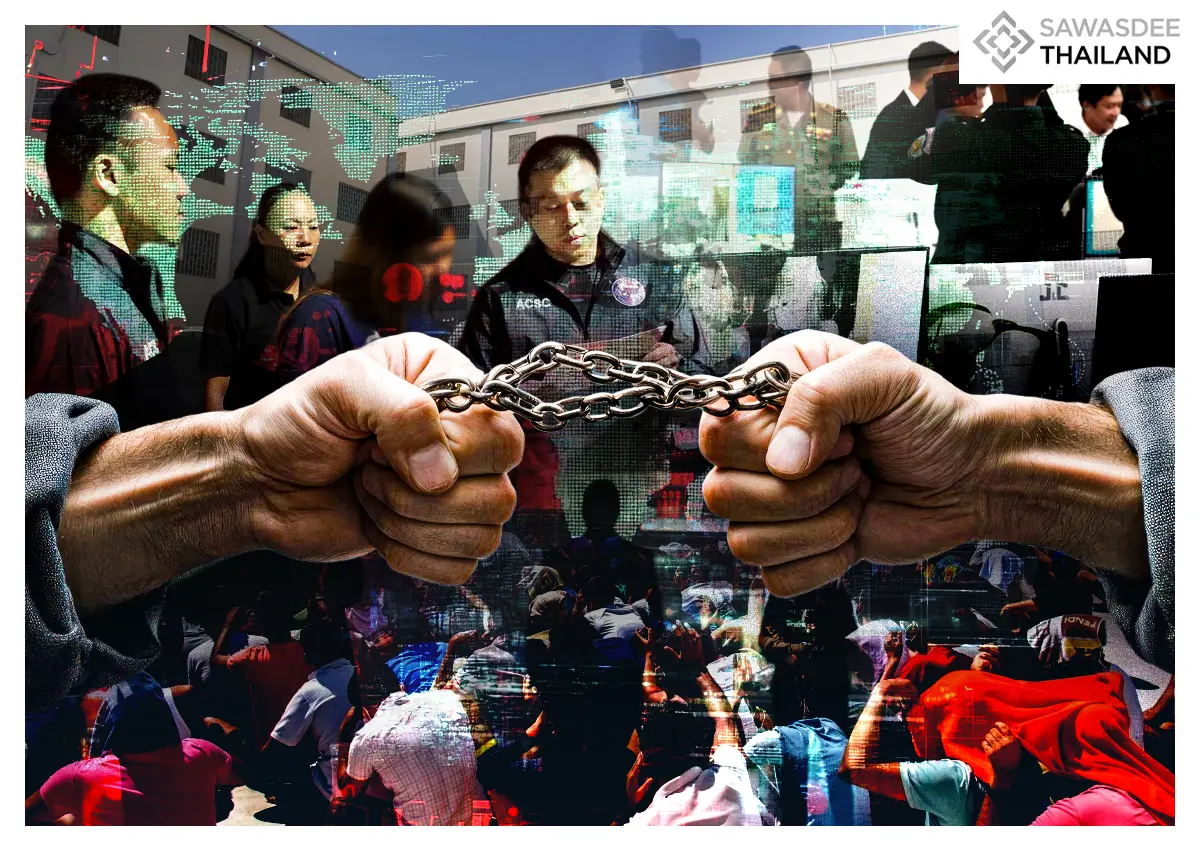
Thailand’s 2026 anti-crime strategy is no longer centred on a single foreign partner or enforcement agency. It combines the Royal Thai Police’s SHIELD data platform, joint operations with countries across Asia and the Pacific, cooperation through ASEAN-led frameworks, victim protection and AI-supported public-safety systems.
A New Era of Connected Public Safety
Thailand has made cybercrime and transnational crime a national priority, bringing together police, financial investigators, government agencies, banks, technology companies and foreign partners. The aim is to move more quickly from intelligence to account freezes, arrests, asset seizures, victim rescue and prosecution.
At the centre is SHIELD — the SCAM and Human Trafficking Information Exchange and Linked Database. Developed by the Royal Thai Police, the web-based platform records, analyses and exchanges information on online scams and human trafficking, linking evidence, communications, financial transactions and cross-border movements.
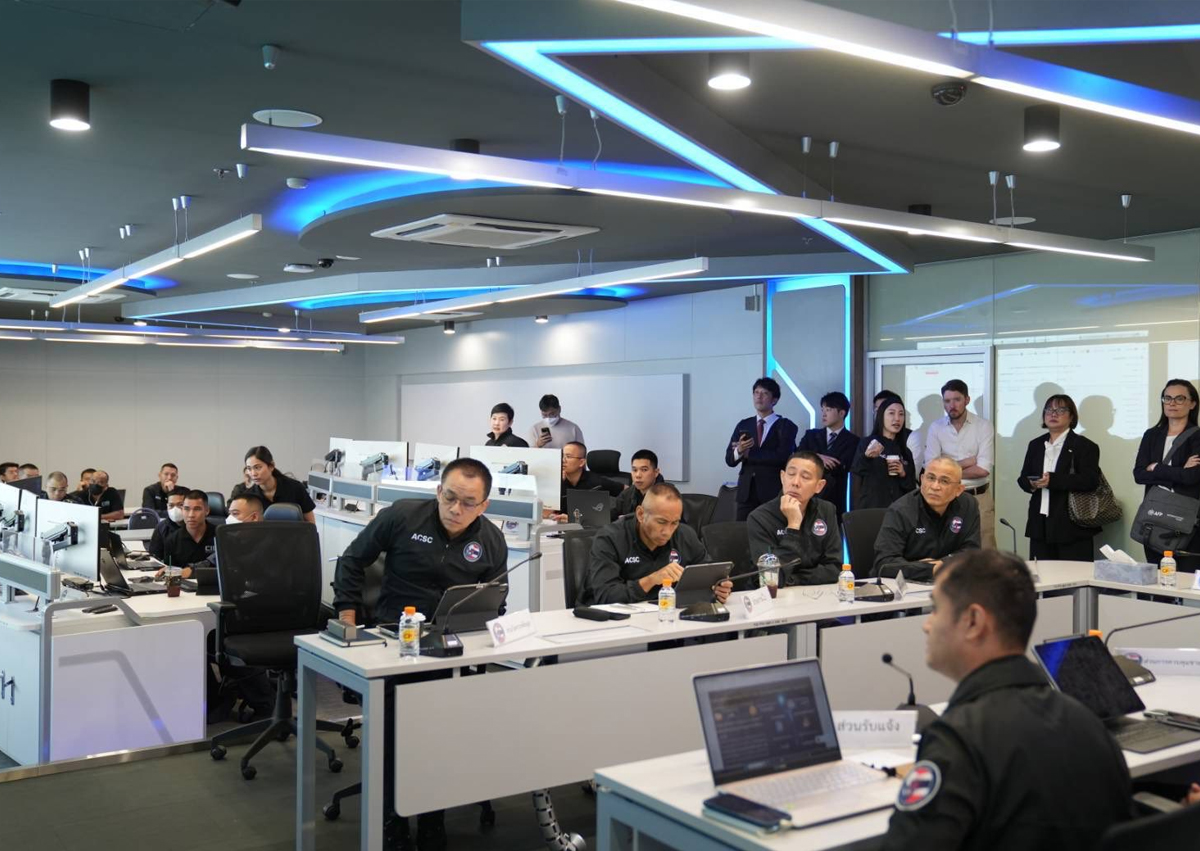
It builds on Thailand’s International Anti-Scam and Human Trafficking Syndicate Command Centre, or Warroom IAC, and the Royal Thai Police’s Anti-Cyber Scam Centre.
Ten Countries, One Information Network
Thailand is positioning SHIELD as an international operational hub rather than a purely domestic database.
At its July rollout, the platform was supported by ten partner countries: Australia, China, India, Japan, Malaysia, Nepal, the Philippines, South Korea, the United States and Vietnam. The group brings together major victim markets, regional transit points and countries with significant cybercrime, financial-intelligence and law-enforcement capabilities.
The wider architecture also involves international organisations. Thailand has expanded anti-fraud cooperation with the United Nations Office on Drugs and Crime, or UNODC, and INTERPOL, while the International Organization for Migration, or IOM, supports assistance, protection and return arrangements for trafficking victims, including people exploited in online scam operations.
Beyond the FBI: Operations with a Wider Coalition
US cooperation remains important, but it sits within a much broader network.
During a Joint Disruption Week in March, the Royal Thai Police Anti-Cyber Scam Centre worked with the FBI, the US Department of Justice Scam Center Strike Force, Meta and law-enforcement partners from the United Kingdom, Canada, Australia, New Zealand, Japan, South Korea, Singapore, the Philippines and Indonesia.
Meta disabled more than 150,000 accounts associated with scam-centre networks, while Thai police arrested 21 suspects. The operation followed an earlier pilot in December 2025 that removed more than 59,000 accounts, pages and groups.
Thailand and the FBI have since agreed to expand intelligence sharing and cooperation against scam networks, drug trafficking and human trafficking. However, the range of participating countries shows that Thailand’s strategy extends well beyond its relationship with Washington.
Bangkok also hosted the 26th FBI National Academy Associates Asia-Pacific Chapter Retraining Conference from June 7–10. More than 150 senior law-enforcement representatives from 26 countries discussed cybercrime, human trafficking, money laundering, narcotics and organised crime under the theme “United in Action: Combating Transnational Organized Crime in the Digital Age”.
Australia as a Long-Term Operational Partner
Australia is among Thailand’s most established partners in combating serious and organised crime.
A joint statement signed by Prime Ministers Anutin Charnvirakul and Anthony Albanese in August 2026 committed police, customs, immigration and financial-intelligence agencies to closer operational cooperation against online scams, trafficking, money laundering, narcotics and illicit financial flows.
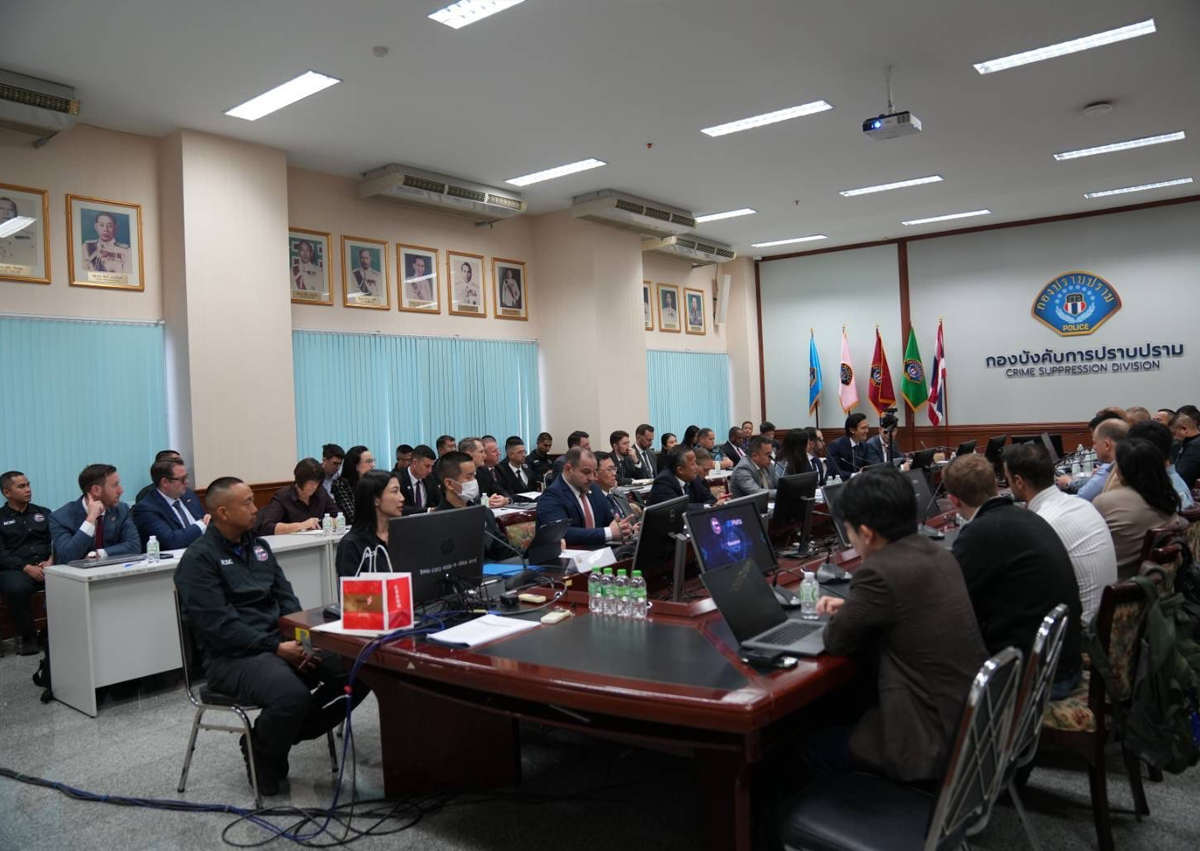
The partnership includes Australian Federal Police support for Thailand’s Anti-Cyber Scam Centre through Operation Firestorm and the longstanding Taskforce Storm, established in 2016 to disrupt drug trafficking and transnational organised crime.
Cooperation also extends through the Mekong-Australia Partnership on Transnational Crime, the ASEAN-Australia Counter Trafficking Programme, the Bali Process and the ASEAN Border Management Cooperation Roadmap.
These mechanisms connect investigations with customs, forensic science, financial intelligence, victim-centred protection and efforts to trace and recover criminal proceeds.
ASEAN as the Regional Backbone
ASEAN-led frameworks give Thailand another layer of cooperation beyond bilateral operations.
Thailand uses mechanisms such as the ASEAN Regional Forum and regional border-management and counter-trafficking programmes to exchange information, strengthen investigative capacity and coordinate responses involving several jurisdictions.
At the ASEAN Regional Forum’s April 2026 meeting on counter-terrorism and transnational crime, Thailand called for collective action against online scams alongside cooperation on human trafficking, drug crime and border security.
This regional architecture is essential because scam compounds, recruiters, financial channels, victims and digital infrastructure are rarely located in one country. A criminal operation may recruit victims in one jurisdiction, operate from another, receive payments elsewhere and launder proceeds through several financial systems.
Bangkok as a Convening Hub
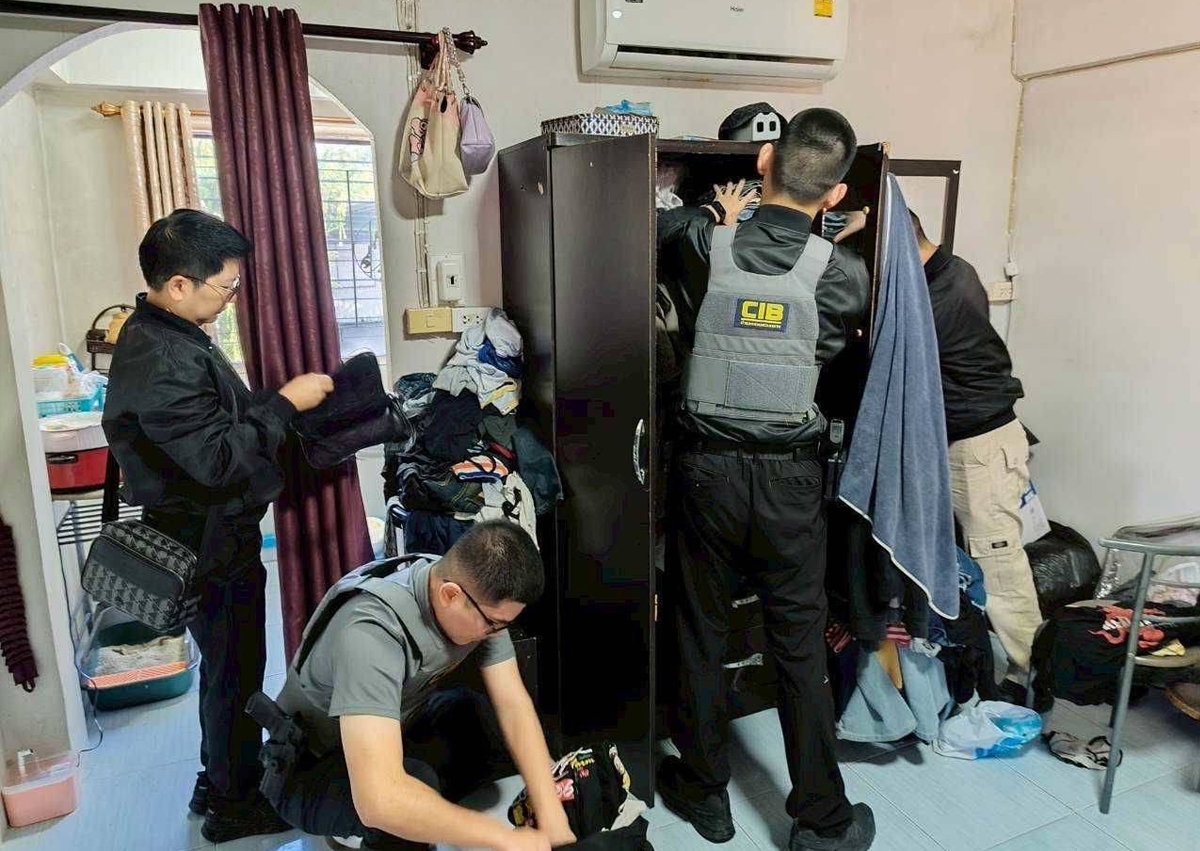
Thailand is also using diplomacy to help shape international anti-scam cooperation. It co-hosted the International Conference on the Global Partnership against Online Scams with UNODC in Bangkok, attracting more than 400 participants from 67 countries, international organisations, technology companies, civil society and academia.
Thai agencies have since carried the agenda into the Global Fraud Summit in Vienna, EU–Thailand discussions for ASEAN and operational dialogues focused on prevention, prosecution, victim protection and international partnerships.
AI for Prevention, Not Only Prosecution
The next layer is prevention. Through the Intelligent Bird Eye Operation Center, or IBOC, Thailand plans to use AI-supported surveillance to identify unusual activity and support faster responses in major economic and tourism areas.
Koh Samet, which receives more than one million visitors annually, is being developed as the pilot site before possible expansion to other important destinations.
A Thai Model Built on Trust and Speed
Thailand’s emerging model combines four elements: linked data, coordinated operations, victim protection and regional diplomacy.
SHIELD can make intelligence move faster. Bilateral partners provide specialist expertise and operational capacity. ASEAN and international organisations widen the system’s reach, while AI tools aim to identify threats before they develop into larger incidents.
The result is a strategy broader than cooperation with the FBI. Thailand is seeking to become a trusted regional connector — able to trace money, identify criminal networks, protect victims and coordinate action across borders before offenders can exploit the gaps between jurisdictions.