Board games turn Thailand's local stories into global adventures

Thai youth are using board games to revive local stories and transform community heritage into cultural appeal with global reach.
Local stories are not always preserved in textbooks. Many live on in the memories of elders, artisans, and other community members who remember the legends, customs, local wisdom, food, and everyday practices that define their hometowns.
But as time passes, those stories risk fading with older generations unless they are passed on in a language and format that younger audiences can understand.
That challenge is at the heart of the Youth Board-Game Designer for Thai Cultural Soft Power Project 2026, held under the theme “My hometown stories to the global game board”. The project is organised by the Department of Cultural Promotion in partnership with the Publisher & Designer Board Game Association, or PUDEBGA.
It invites Thai youth to return to the stories of their own communities, reinterpret them creatively and develop them into board games.
For the project, board games are not being treated simply as entertainment. They are positioned as a contemporary medium that can move community stories from the memories of older generations into the lived experience of new players, both in Thailand and overseas.
The broader goal is to turn local cultural capital into a source of Thai cultural diplomacy within the creative industries.

Local stories need young listeners
Suraphan Charoensap, deputy director-general of the Department of Cultural Promotion, views board games as a medium that can speak to a generation already familiar with mobile games and online platforms.
He noted that board games offer more than fun. They help build skills, sharpen your mind, stimulate the brain, and provide hands-on learning experiences.
From the department’s perspective, developing well-rounded and happy citizens requires media that help children and youth learn about what is close to them, especially the traditions, stories and culture of their own communities.
Turning local stories into board games, Suraphan explained, can make cultural learning more enjoyable, exciting and relevant, while drawing younger audiences back to their own roots.
He also sees board games as a form of creative thinking that can support economic development and form part of Thailand’s soft-power strategy.
The Department of Cultural Promotion is therefore supporting youth across all regions to transform stories from their own areas into creative works, ensuring that youth development and cultural capital are promoted nationwide, he added.
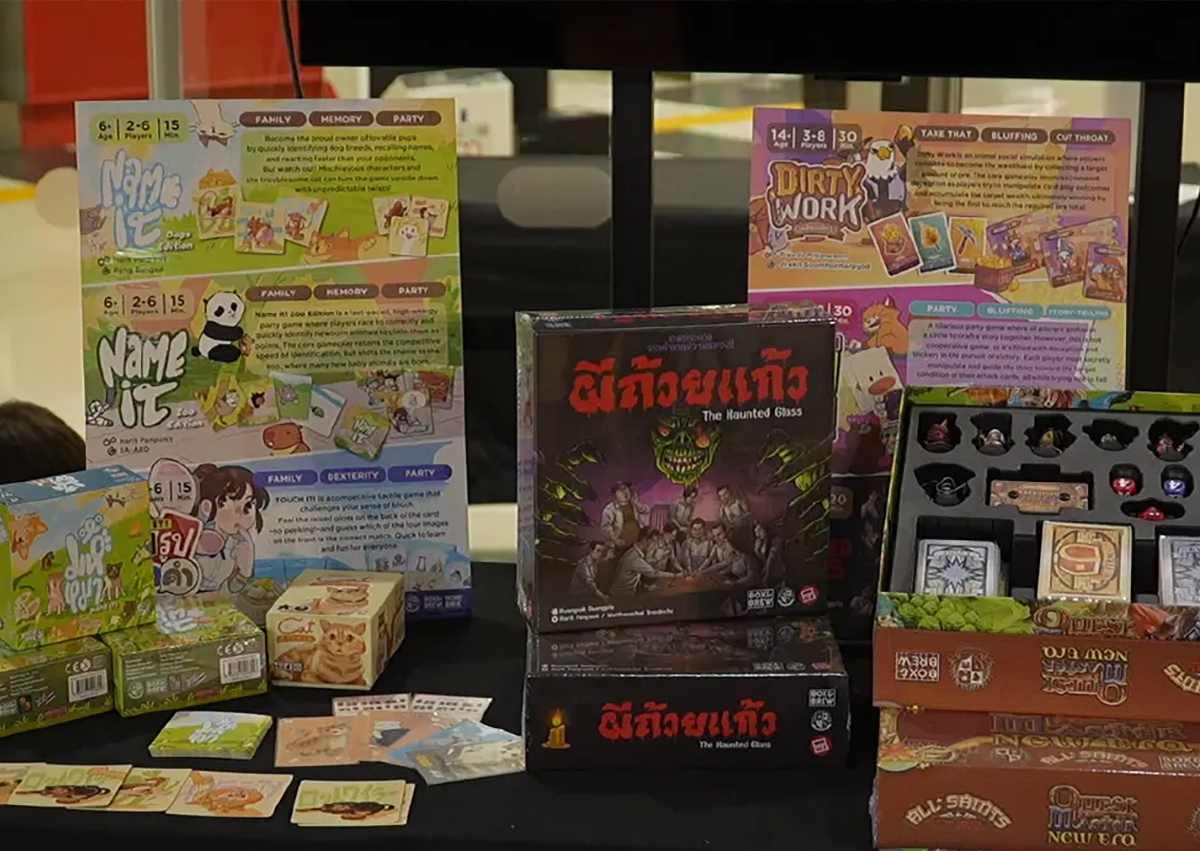
History belongs beyond textbooks
Assoc Prof Dr Chatichai Muksong, a lecturer in the Department of History at the Faculty of Social Sciences, Srinakharinwirot University, argued that history learning should not be limited to memorising names, events or years.
Instead, he views history as a process of understanding people, understanding oneself and understanding the surrounding community. The closest stories, he suggested, are often the most important starting point for learning.
Even as the world moves further into AI, digital technology and globalisation, local stories have not lost their importance. People still need identity, difference and narratives that help explain who they are, he said.
Community stories, therefore, should not be seen merely as old information. They are cultural capital that can be developed into creative media if designed in a way that fits the present age, he added.
However, Chatichai cautioned that using culture creatively requires respect for the owners of knowledge and for people in the community. Local stories are directly tied to memory, pride and identity, so designers must listen to the original storytellers, understand the context and avoid reducing diverse local cultures to simple stereotypes.
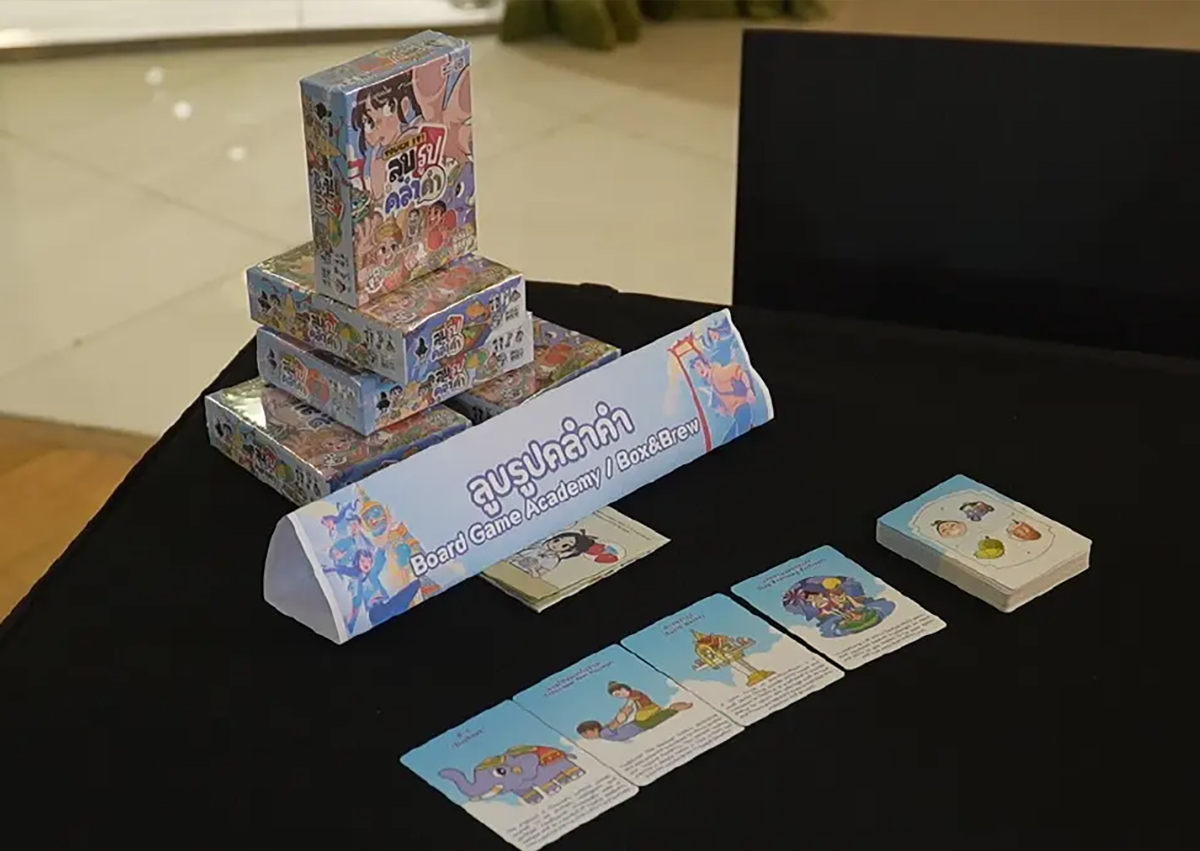
Board games turn community memory into play
For PUDEBGA, the project does not treat young participants only as contestants. It sees them as emerging designers who must learn both how to make games enjoyable and how to handle the meaning behind the stories they choose to tell.
Songsit Phraephet, president of PUDEBGA, explained that the association’s mission is to support and develop Thai game designers so they can compete with international markets.
He believes Thai youth have strong creative potential, and that this project offers an important opportunity for them to move from being players or media users to becoming creators of their own work.
The strength of board games lies in their ability to simulate situations and bring players into the story. Players do not simply receive information in one direction. They must understand roles, goals, conditions and consequences through play.
As they play again, the story that the designer wants to communicate is gradually absorbed through the player’s own experience.
For this reason, the project’s bootcamp process is central. Participants will learn how to extract local stories, design game mechanics, build prototypes and test their ideas with real players, he said, adding that experts and professional board-game designers from Thailand and overseas would also provide guidance.
From players to creators of culture
Phattharachai Winichakul, acting deputy director of the Office of Knowledge Management and Development and director of Thailand Knowledge Park, views the project as a concrete example of how learning spaces can support youth and communities.
In his view, such projects help participants move from being users or players to creators of their own work.
Working with cultural capital should not focus only on the finished product. It requires an ecosystem, beginning with the community that owns the story and extending to the players who will experience the work.
A good game must therefore connect back to its cultural foundation while also considering who it is meant to reach and what kind of impact it can create.
When board games are designed to be both enjoyable and culturally meaningful, they can become a bridge between communities and the younger generation, between the local and the wider world, and between preservation and economic development.
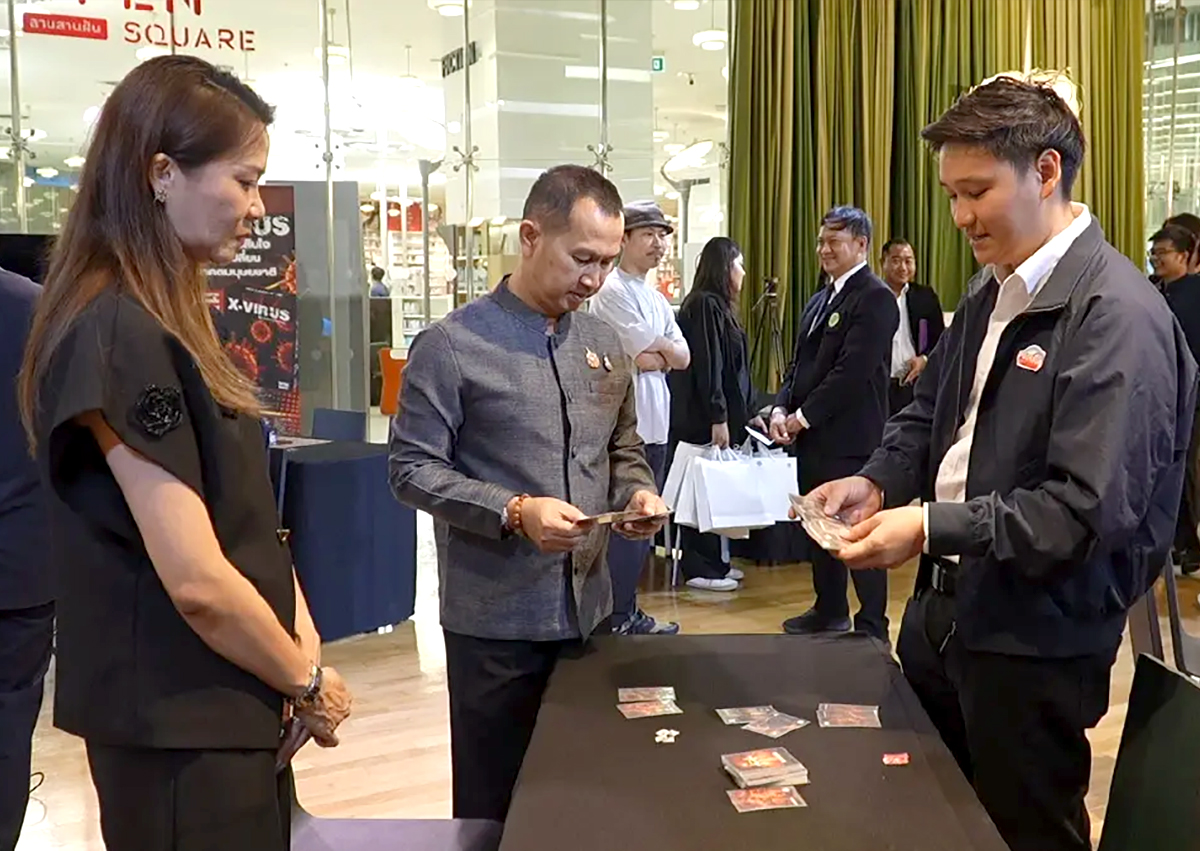
Local stories could reach the global game board
The project’s ambition does not end with selecting winners. It aims to support outstanding works so they can potentially be developed, produced and distributed in real markets, both commercially and as tools for cultural communication on the international stage.
If successful, Thai soft-power board games will become more than a youth competition. They could become a new route for community stories to travel further than before, from local conversations to game tables in other regions and, eventually, to international players who discover Thailand through play rather than explanation.


