Waste-to-Energy Drives Thailand’s Clean Power Shift

Thailand is using waste-to-energy projects to reduce landfill, generate electricity, cut pollution and support its clean energy transition.
Thailand is increasingly using waste-to-energy projects as part of its drive to reduce landfill, generate electricity, cut pollution and support the country’s clean energy transition.
Waste-to-energy is emerging as one of the country’s key approaches to turning municipal waste into a domestic energy resource. The concept allows solid waste to be converted into electricity, making use of materials already available in urban areas while helping strengthen local power generation.
The approach is also seen as an alternative energy source that can support energy security and ease the growing burden of municipal waste.
By reducing the volume of rubbish sent to landfill sites, waste-to-energy projects can help cut land use, leachate, odour and other impacts on nearby communities. This can improve people’s quality of life and contribute to stronger, more sustainable community development.
Bangkok Expands Waste-to-Energy Plants
Thailand already has several waste-to-energy projects designed to address environmental problems while strengthening the country’s energy security.
In Bangkok, the Bangkok Metropolitan Administration is developing waste incineration projects to produce electricity at the Nong Khaem and On Nut Waste Disposal Centres. Each project is designed to handle at least 1,000 tonnes of waste per day.
The projects form part of City Hall’s plan to reduce landfill disposal by converting waste into energy. Waste collected for the projects is stored in closed receiving pits for three to five days to reduce moisture by around 35%.
It is then moved by crane into a stoker-type incinerator, where the temperature is maintained at around 850-1,100 degrees Celsius. The heat is used to boil water and produce high-pressure steam, which drives a turbine and generator to produce electricity.
The projects support Bangkok’s strategy to reduce landfill use and adopt waste-to-energy technology as an alternative solution for municipal waste management.
Chiang Rai Turns Farm Waste into Community Resource
Beyond municipal waste, agricultural residues are also being turned into useful resources through innovation.
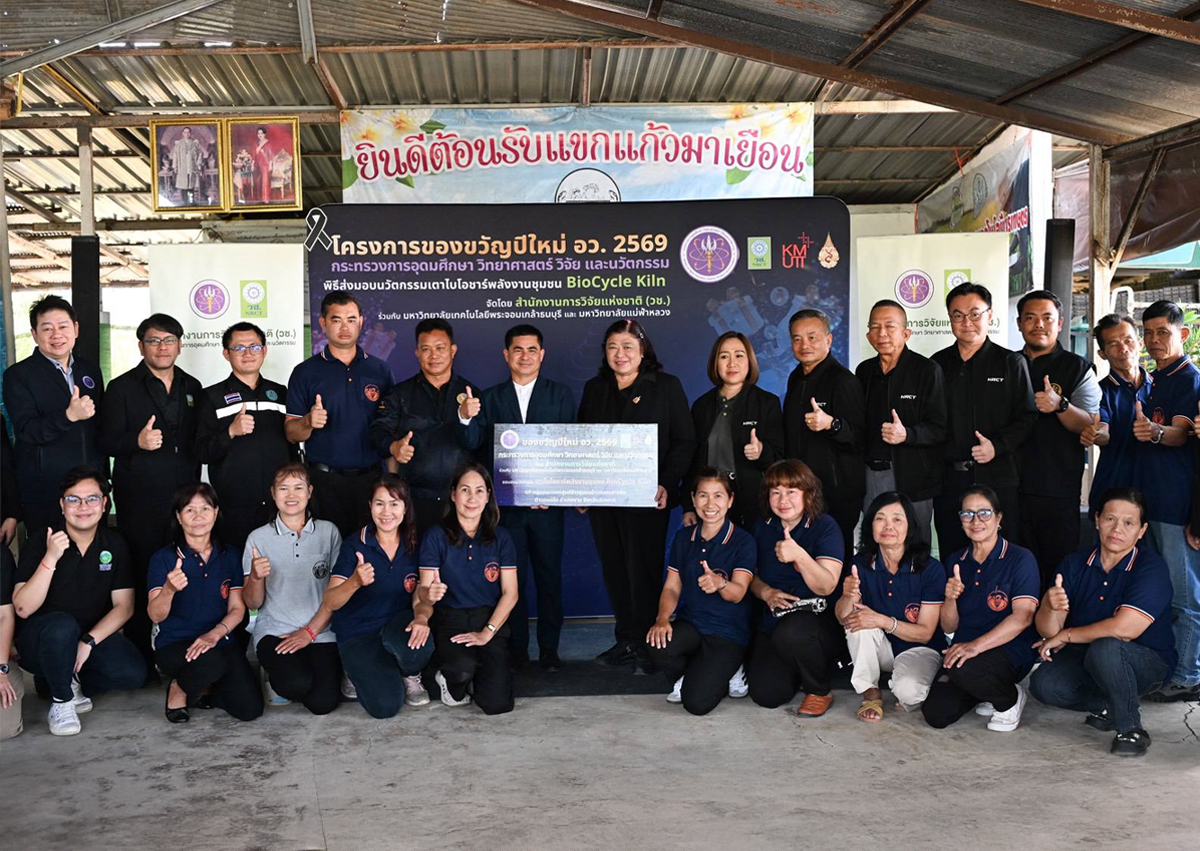
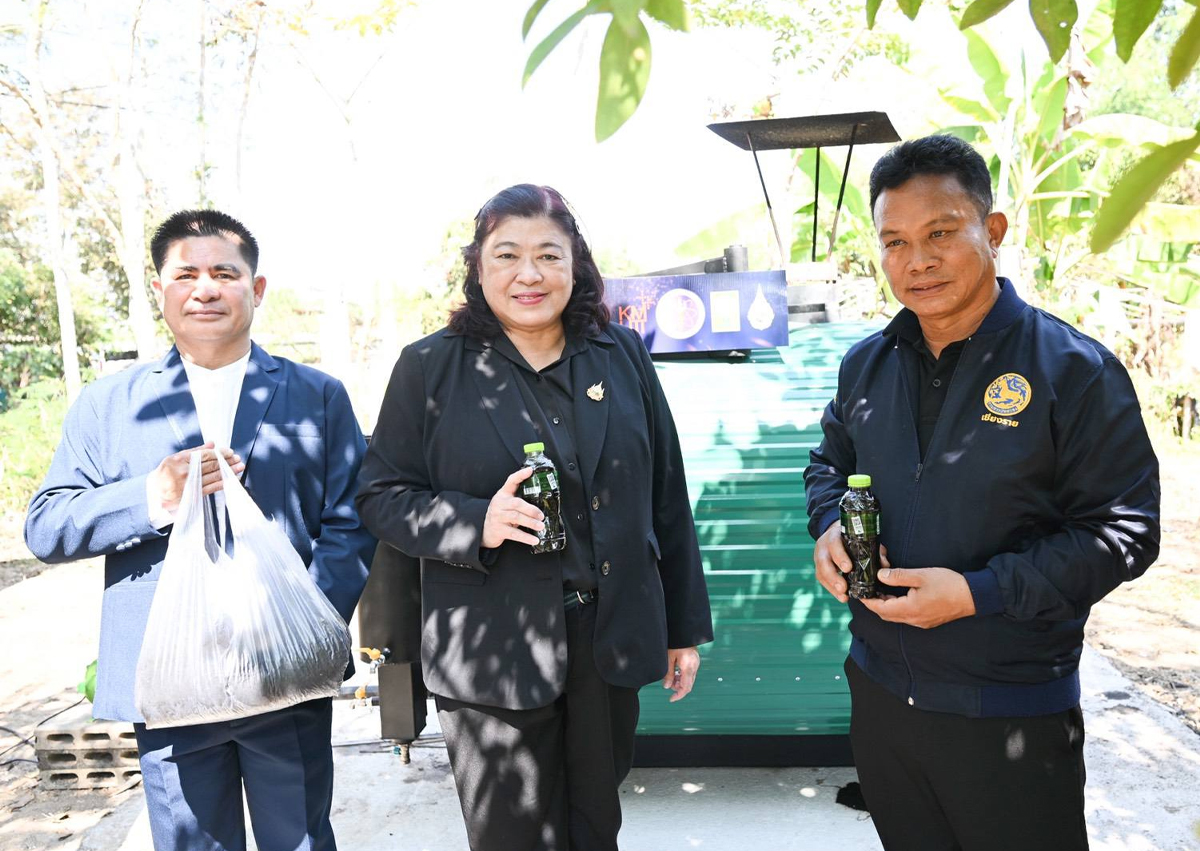
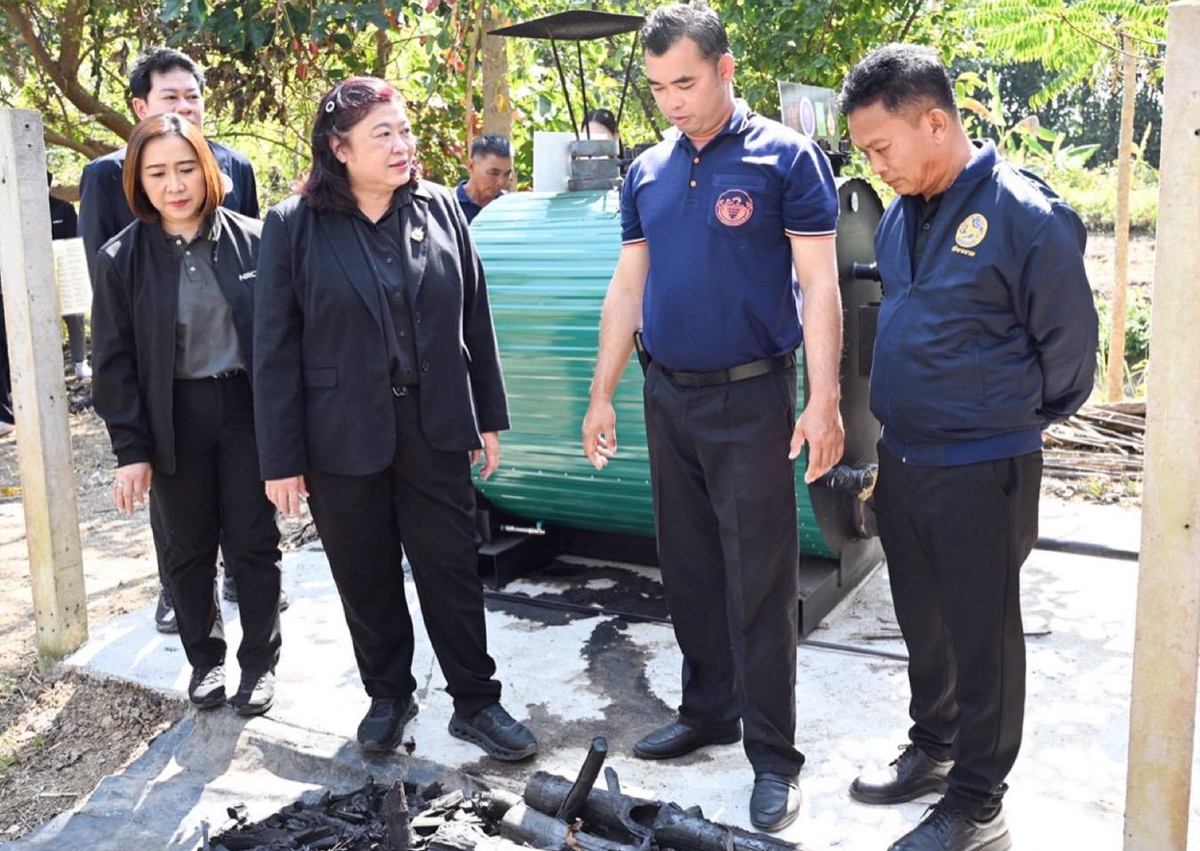
In Chiang Rai, the BioCycle Kiln has been introduced as a community energy innovation designed to convert agricultural waste into valuable materials while helping to reduce air pollution and related health impacts.
According to the National Research Council of Thailand, the BioCycle Kiln was developed with NRCT support by King Mongkut’s University of Technology Thonburi in collaboration with Mae Fah Luang University.
The innovation applies research-based knowledge to the management of agricultural residues, including rice straw and other biomass.
Instead of being burned in open fields, these materials can be converted into biochar to improve soil quality, processed into construction materials that enhance the energy efficiency of buildings, or used as fuel to generate electricity.
The project helps farmers reduce agricultural production costs and cut open burning, one of the causes of hotspots that contribute to air pollution. It also helps reduce pollution-related health risks for local communities.
New PDP to Accelerate Clean Power Shift
The Energy Policy and Planning Office is preparing a new draft Power Development Plan, or PDP, which is expected to serve as a key foundation for upgrading Thailand’s energy system in line with changes in the global economy and fast-moving energy technology.
The new draft, updated as PDP 2026, extends the planning period from 20 years to 25 years, covering 2026-2050. The change is intended to align the power sector with the government’s faster Net Zero Emissions target, which has been brought forward from 2065 to 2050.
This shift requires the Energy Ministry to increase the share of renewable energy in power generation at a faster pace. By 2037, clean energy is expected to account for at least 51% of Thailand’s power mix, potentially rising to as much as 60%.
The increase is designed to support industrial demand for green electricity while replacing part of the power supply currently generated from fossil fuels, including coal-fired power plants.
To meet environmental targets without compromising energy security, the draft PDP includes several new energy technologies. These include Small Modular Reactors, or SMRs, with more than 600 megawatts expected to be included as a zero-carbon power generation source.
The draft also includes hydrogen blending, with hydrogen to be mixed with natural gas at a 5% ratio from 2030 to reduce fossil fuel use in major power plants.
Another key technology is carbon capture and storage, or CCS. PTT Exploration and Production is piloting CCS at the Arthit gas field and aims to support the development of an Eastern Thailand CCS Hub in the Eastern Economic Corridor.
The government is also focusing on rooftop solar, community power plants and wider public access to clean energy at fair prices, while encouraging more consumers to become producers of their own electricity to support long-term sustainability.


