Thai-Made H-FAME Cuts PM Emissions Without Engine Modification

Thai-developed H-FAME premium biodiesel can cut PM emissions by up to 86% and CO2 emissions by 50% without the need to modify diesel engines.
As the world moves towards a low-carbon society, Thailand is showcasing practical research with Hydrogenated Fatty Acid Methyl Ester (H-FAME), or premium biodiesel, developed by a Thai research team to overcome the weaknesses of conventional biodiesel and address the limitations of electric vehicles in heavy transport.
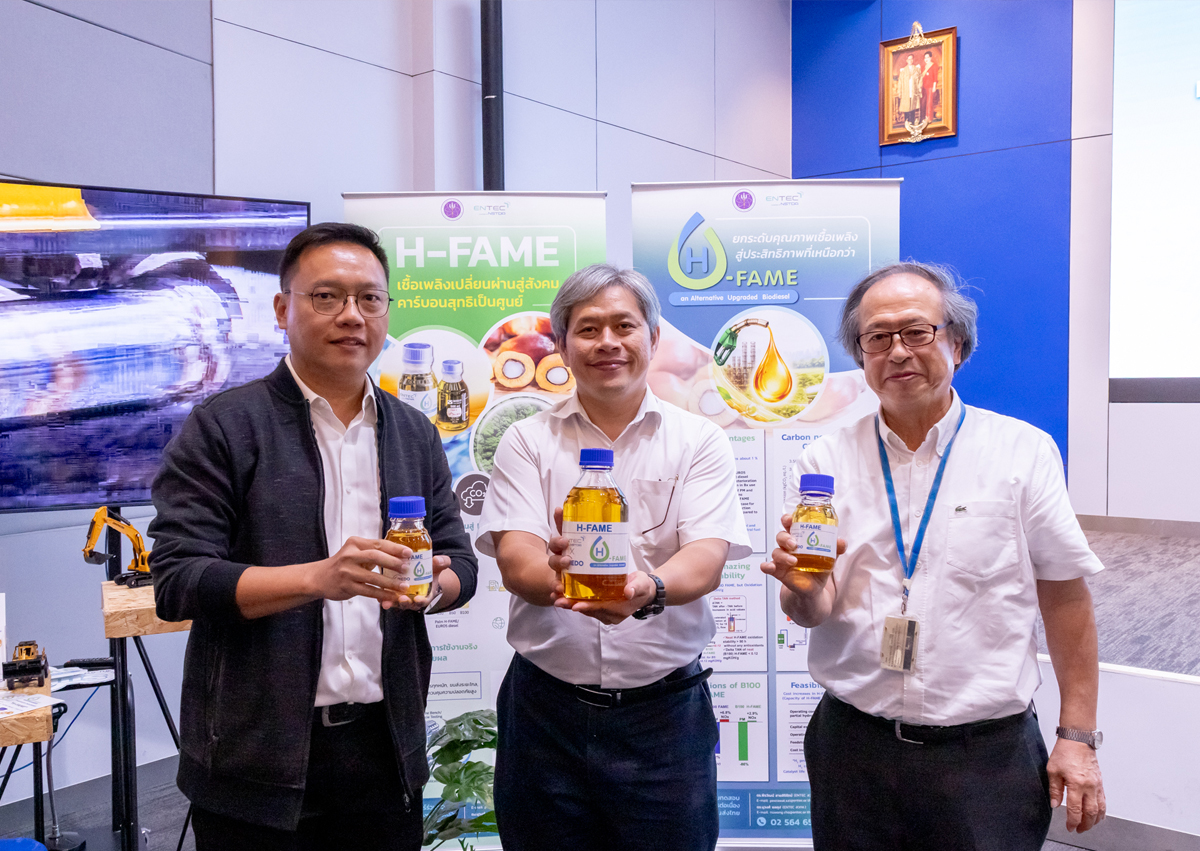
Dr Suparoek Henpraserttae, a researcher in clean fuel technology and advanced chemistry at the National Energy Technology Centre (ENTEC), said the main weakness of conventional biodiesel, or FAME, is its instability. It reacts easily with oxygen, causing the fuel to deteriorate and potentially corrode engines.
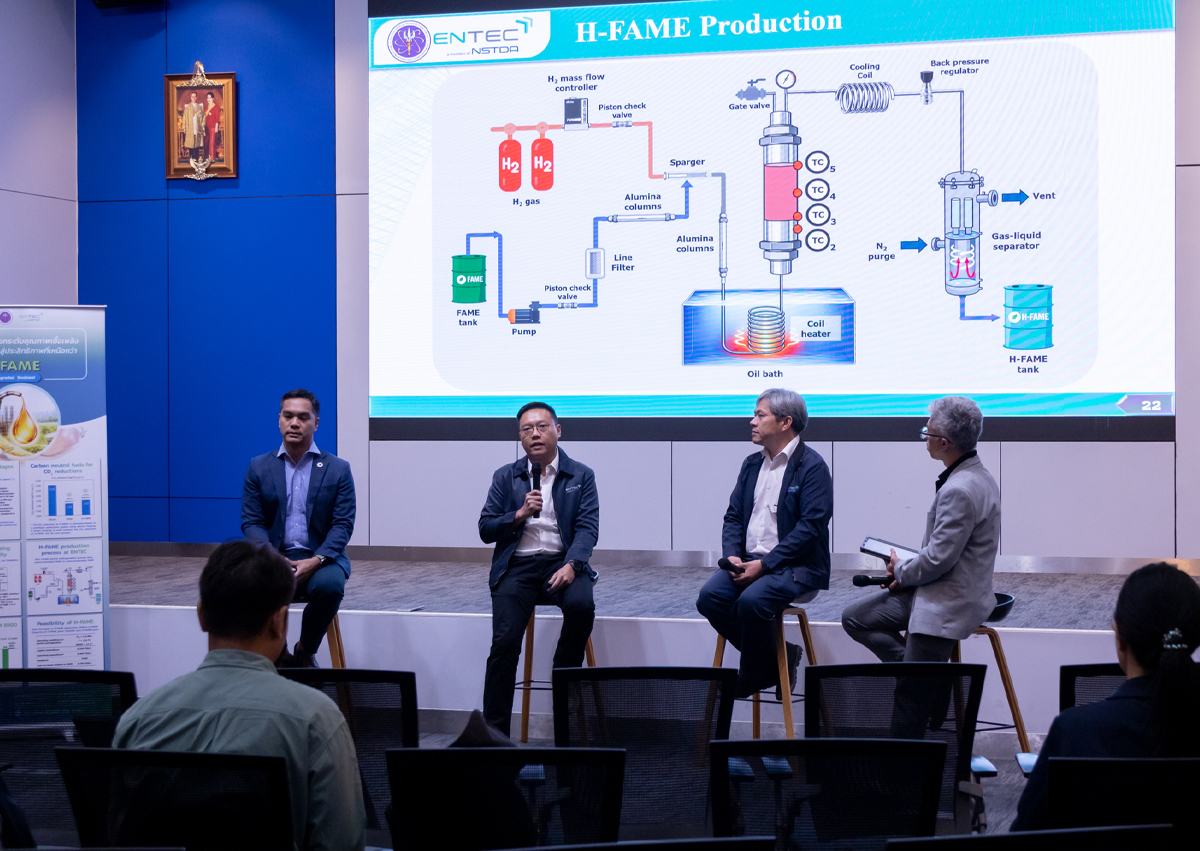
Speaking at the NSTDA x Press Interviews event on “H-FAME: Low-carbon biofuel as a transport option towards net zero amid the global energy crisis”, Suparoek said the research team had therefore used a partial hydrogenation process, adding hydrogen to the molecules to change the fuel structure and make it three times more stable.
“H-FAME is what is known as a drop-in fuel. This means it can be used immediately in existing diesel engines without any modification at all,” Suparoek said, adding that this advantage could help accelerate the transition to cleaner energy.
High Performance, Less PM, No Smell and Smooth Driving
Field tests using a Euro 4 pickup truck over more than 10,000 kilometres found that drivers noticed no difference from using standard diesel. However, a clear difference was the sharp reduction in black smoke and the absence of unpleasant odour.
Scientific data confirmed that H-FAME can reduce PM emissions by up to 86% and cut carbon dioxide emissions by up to 50% per litre compared with petroleum-based diesel.
Beyond trucks, H-FAME can also be used effectively in industrial and construction machinery without engine modification, as its drop-in fuel properties allow it to work immediately with existing diesel engines.
For industrial machinery, H-FAME has been tested in diesel-powered forklifts, with satisfactory results and reduced pollution in workplaces.
For construction machinery, H-FAME has been supplied to private companies for use in bulldozers and compactors, which are heavy-duty machines requiring high power, to prove its performance under demanding operating conditions.
In terms of engine coverage, the research team confirmed that field tests had been carried out with private-sector partners across several industries. The fuel can support high blending levels up to B100, or 100% H-FAME, while engines continue to operate normally.
Given its properties as a premium, high-stability biodiesel, H-FAME possesses significant potential for seamless integration into agricultural machinery. As a 'drop-in' replacement for standard diesel, it offers a high-performance alternative for tractors and various farm equipment, providing a cleaner combustion process that effectively eliminates black smoke and unpleasant odours.
Real-World Users Point to Business Benefits
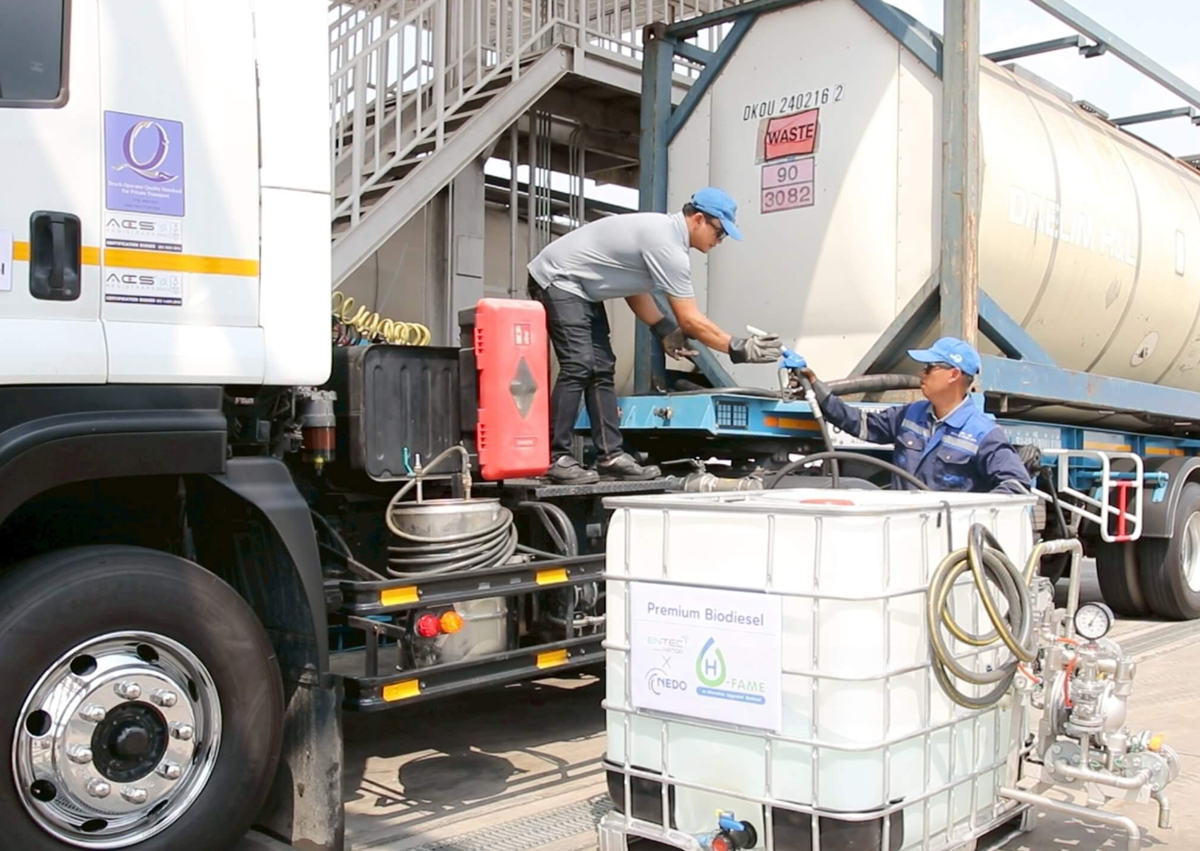
From a business perspective, Siamnat Panassorn, CEO of Sun-Up Recycling Co Ltd, which has been using H-FAME in hazardous-goods transport trucks for more than a year, said the fuel was the most suitable missing piece for transport businesses that cannot yet switch to electric vehicles.
He cited safety concerns over large batteries in vehicles transporting flammable chemicals, as well as the high investment cost of charging stations.
“We use H-FAME without having to invest in chargers or modify our vehicles. Although the price may initially be slightly higher than ordinary fuel, it is highly worthwhile in helping reduce our corporate carbon footprint and Scope 3 carbon emissions for global customers such as Apple and Foxconn, making the supply chain more sustainable at the same time,” Siamnat said.
He added that, in times of global energy volatility and supply chain disruptions, using H-FAME made from domestic raw materials also helped strengthen the company’s energy security.
Next step towards industrial scale
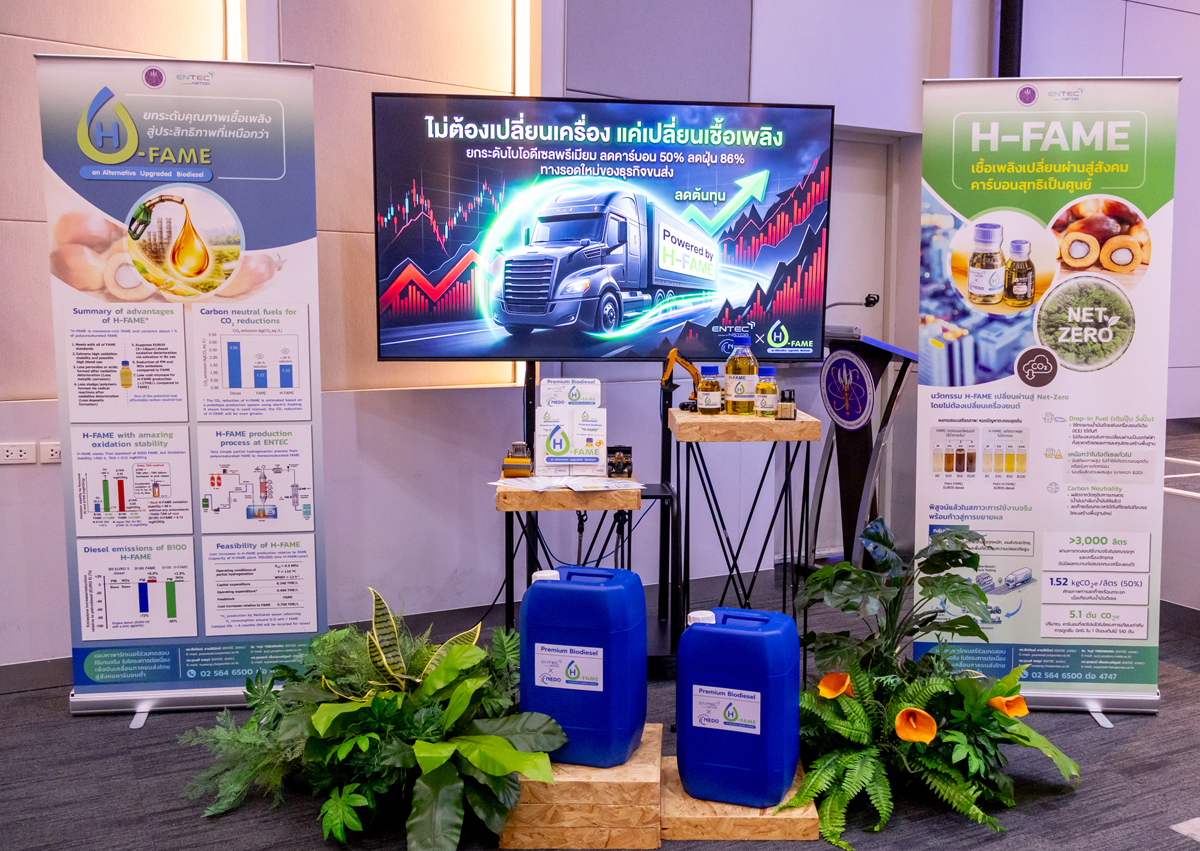
The project can currently produce H-FAME on a pilot scale, at around 500 litres per day. Discussions are under way with biodiesel producers to expand production to demonstration plants with a capacity of 10,000–30,000 litres per day.
This would be an important mechanism in helping Thailand make tangible progress towards its net zero target through practical innovation that can be used with existing infrastructure.